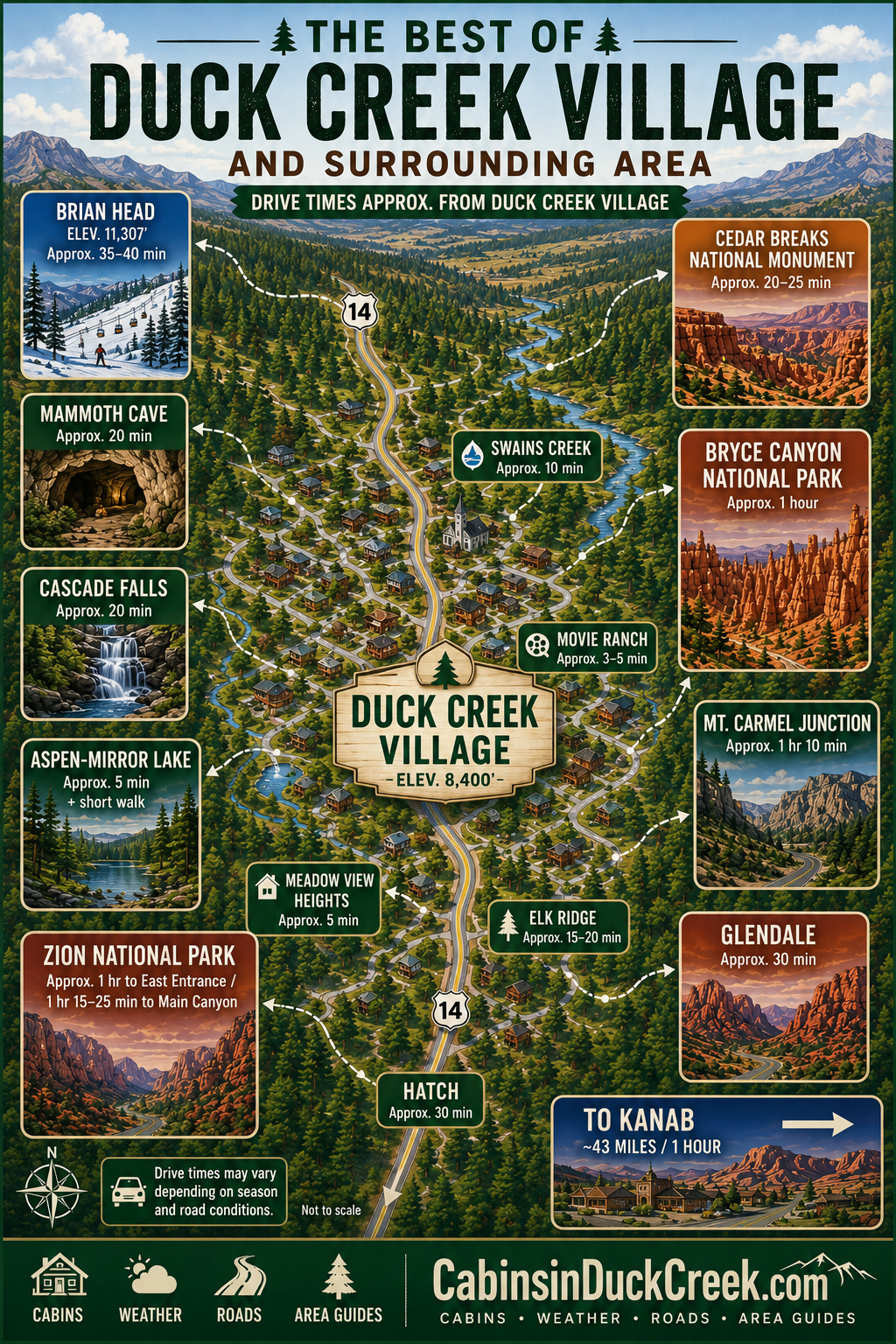
One of Utah's crown jewels — a high-plateau amphitheater packed with thousands of crimson hoodoos eroded into surreal shapes. Sunrise from Bryce Point or Sunrise Point is a must.
- 🗺️Route: Head east on Hwy 14, south on Hwy 89 toward Panguitch, then east on Hwy 12 to the park entrance.
- 🎟️Entry Fee: $35/vehicle (7-day pass). America the Beautiful Pass accepted.
- 🥾Top Hikes: Navajo Loop (1.3 mi, strenuous), Queens Garden Trail (2.5 mi), Rim Trail (11 mi, easy).
- 📅Best Seasons: May–October for hiking; December–March for snowshoeing among hoodoos.
- 🌡️Altitude: 8,000–9,100 ft — comparable to Duck Creek. Layers still required.
- 🅿️Parking: Visitor Center lot fills by 9 AM in peak summer. Use the shuttle from 8 AM–8 PM.
Local Tip
Book a stargazing program through the park — Bryce Canyon is a Gold-Tier International Dark Sky Park and the night sky is extraordinary.
Utah's most-visited park. Towering sandstone cliffs, the Virgin River Narrows, and the legendary Angels Landing await. Approximately 1 hour to the East Entrance; 1 hr 15–25 min to the main canyon via Hwy 9.
- 🗺️Route: South on Hwy 14 to Hwy 89, then west on Hwy 9 through Mt. Carmel Junction into the main canyon.
- 🎟️Entry Fee: $35/vehicle (7-day pass). America the Beautiful Pass accepted.
- 🥾Top Hikes: The Narrows (bottom-up, varies), Angels Landing (5.4 mi — permit required), Emerald Pools (1.2–3 mi).
- 🚌Shuttle: Required in main canyon March–November. No private vehicles past the Visitor Center.
- ⚠️Permits: Angels Landing and The Narrows overnight require advance lottery permits via recreation.gov.
- 📅Crowds: Peak season is April–October. Arrive before 7 AM or after 3 PM to beat crowds.
Local Tip
The east entrance (via Hwy 9 tunnel) is often less congested and offers a completely different view of the park. Great side-canyon hikes near the east entrance too.
A high-altitude amphitheater of brilliant orange, red, and purple rock — like a miniature Bryce Canyon at 10,000 feet. Far fewer crowds, spectacular wildflowers in July.
- 🗺️Route: West on Hwy 14 toward Cedar City. The monument is accessible from Hwy 148.
- 🎟️Entry Fee: $20/vehicle (7-day pass). America the Beautiful Pass accepted.
- 🥾Top Hikes: Alpine Pond Trail (2 mi loop), Spectra Point / Ramparts Overlook (4 mi).
- ❄️Season: Road typically open June–October. Snowshoeing and cross-country skiing in winter.
- 🌸Wildflowers: Mid-July is peak bloom — Indian paintbrush, columbine, and larkspur fill the meadows.
- 🌡️Elevation: 10,000–10,469 ft. Significantly cooler than the valley — bring a jacket even in summer.
Local Tip
Much less visited than Bryce or Zion. Weekday mornings offer near-solitude at the rim overlooks with equally dramatic views.
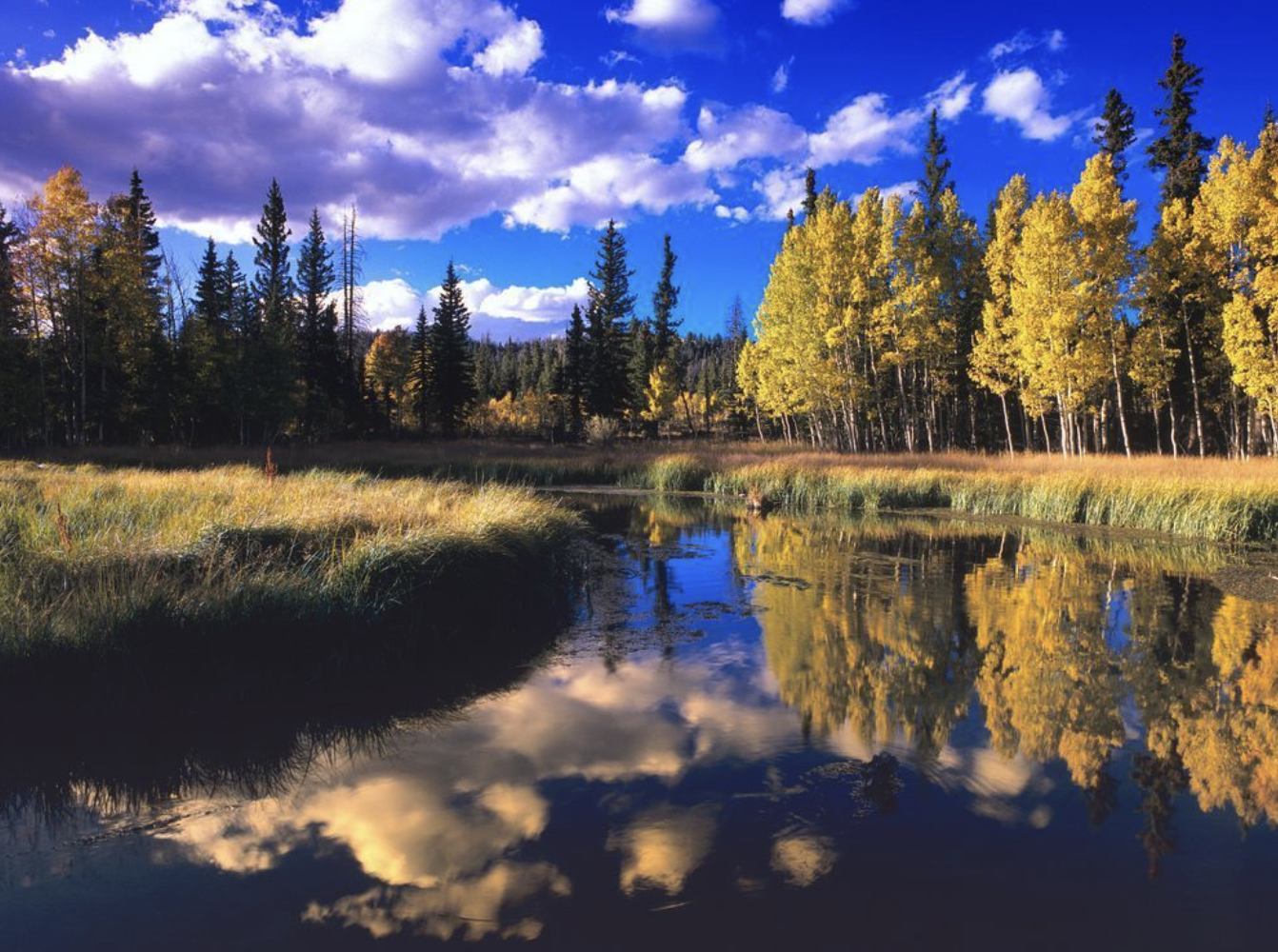
A serene alpine lake surrounded by aspen groves, just minutes from the village center. Perfect for a quiet morning walk, photography, or letting the kids explore the shoreline.
- 🚶Access: Short drive from village center, then an easy short walk to the lake's edge.
- 🍂Best Season: Fall foliage (late September/early October) turns the surrounding aspens brilliant gold.
- 📸Photography: Morning light and still water create perfect reflections of the surrounding forest and sky.
- 🎣Fishing: Stocked with rainbow trout. Utah fishing license required. Catch-and-release encouraged.
- 🐾Dogs: Permitted on leash. Keep near water — watch for wildlife at dusk and dawn.
Local Tip
Go at first light for glassy water reflections before afternoon winds pick up. The aspen grove along the south shore is one of the most photographed spots in the area.
A dramatic waterfall hidden within a lush canyon — water cascades directly out of a limestone cliff face and disappears underground. A geological curiosity and a refreshing hike.
- 🥾Trail: The Cascade Falls Trail is approximately 1 mile round-trip with modest elevation gain. Accessible for most fitness levels.
- 🌊Peak Flow: Late spring snowmelt (May–June) produces the most dramatic cascade volume.
- 🪨Geology: Water from Navajo Lake flows underground and re-emerges here — a rare karst spring feature worth explaining to kids.
- 🐦Wildlife: Watch for canyon wrens, mule deer near the trailhead at dusk, and occasional elk in fall.
- ❄️Winter: Trail can ice up significantly. Microspikes recommended November through April.
Local Tip
Often paired with a Navajo Lake loop on the same half-day outing. Both are in the same direction and the drive along Hwy 14 is scenic in its own right.
A lava tube cave accessible via an easy trail — a cool, dark interior that's a welcome escape on warm days and a fascinating geology lesson for all ages.
- 🕯️Access: Bring a flashlight or headlamp — the cave interior is unlit. The trail to the entrance is less than a mile.
- 🌡️Temperature: Interior stays around 50°F year-round. Bring a layer regardless of outside temps.
- 👟Footwear: Closed-toe shoes essential — the cave floor is uneven volcanic rock.
- 🆓Cost: Free to access. No permits required. Managed by Dixie National Forest.
- 🧒Kids: Highly popular with families. Supervise closely inside — drops and unstable surfaces present.
Local Tip
Easier to visit early morning before afternoon thunderstorms common in summer. Combine with Cascade Falls for a full half-day of nature stops.
A local creek meandering through meadows and pines near Duck Creek Village — ideal for fishing, picnicking, and exploring with young children in a low-key, crowd-free setting.
- 🎣Fishing: Good trout fishing in season. Utah fishing license required. Check DWR for current stocking schedule.
- 🧺Picnicking: Flat, accessible creek-side areas are perfect for families. No official facilities — pack in/pack out.
- 🌿Wildlife: Watch for great blue herons, belted kingfishers, and mule deer along the streambed.
- 💧Flow: Strongest May–July with snowmelt runoff. Late summer can reduce to a trickle.
Local Tip
Often overlooked in favor of bigger-name attractions. If you want solitude and a slow morning, this is the move.
A scenic elevated ridge area with broad views of surrounding plateau country — popular with OHV/ATV riders, mountain bikers, and hunters in fall. Dramatic panoramas with minimal effort.
- 🏍️OHV Access: Extensive network of dirt roads and trails accessible from this area. Check Dixie NF trail maps for current open routes.
- 🦌Wildlife: Elk frequently spotted early morning and at dusk, especially in fall during rut season.
- 🌅Views: On clear days, visibility extends toward the Grand Staircase and Escalante country to the east.
- 🍂Fall: Prime foliage destination — mixed aspen and conifer landscape puts on a strong fall color show.
Local Tip
If you have an ATV or side-by-side, Elk Ridge is one of the best access points into the broader Dixie National Forest trail network. Plan at least a half-day.
A residential and cabin community immediately adjacent to Duck Creek Village, set at the meadow's edge with open views into surrounding forest and pasture land.
- 🏡Character: Quieter than the village core, with widely spaced cabins and direct meadow access for morning walks.
- 🌅Views: Open meadows make this area excellent for sunrise and sunset photography without tree obstruction.
- ❄️Winter: Excellent snowshoeing and cross-country skiing directly from the neighborhood into adjacent meadows.
- 🌿Wildlife Corridor: The meadow edge is active at dusk — deer, fox, and occasional black bear transit through seasonally.
Local Tip
Look for cabins here if you want more privacy and natural setting than the village core — closer to Duck Creek Pond trail access as well.
A historic property just minutes from the village — formerly used as a filming location for Western films and television. A fun piece of local history with a frontier character.
- 🎬History: The southern Utah plateau was a premier Western film backdrop through the mid-20th century. This property is part of that legacy.
- 📸Photo Op: The ranch aesthetic and surrounding landscape make for interesting Western-themed photography.
- 🔒Access: Private property — admire from the road and respect boundaries. Do not enter without permission.
Local Tip
Great talking point and quick stop on the way in or out. Kids who love Westerns get a kick out of the backstory.
Utah's highest-elevation ski resort at 11,307 feet. Reliable snow conditions, family-friendly atmosphere, and significantly less crowded than the Wasatch resorts up north.
- ⛷️Terrain: 71 runs across two peaks. Mix of beginner, intermediate, and black diamond terrain.
- ❄️Snow Season: Typically open mid-November through April. Average annual snowfall exceeds 360 inches.
- 🎿Rentals & Lessons: Full rental shop and ski school on-site. Good option for beginners.
- 🏔️Summer: Mountain biking, hiking, and ATV trails open when snow melts — typically June through October.
- 🍕Dining: Several lodge restaurants on-site. Brian Head town has additional options nearby.
- 🎟️Lift Tickets: More affordable than Wasatch resorts. Check brianhead.com for current pricing and multi-day deals.
Local Tip
Stay at Duck Creek, ski Brian Head — a fraction of the cost of Park City or Alta with dramatically fewer lift lines. Weekday mid-January through mid-February is the sweet spot.
A small crossroads community at the junction of Hwy 89 and Hwy 9 — the gateway to Zion from the east. Notable for its working pottery studios, galleries, and the famous Thunderbird Resort murals.
- 🏺Pottery & Art: Several studio galleries clustered at the junction sell locally made ceramics and landscape art.
- ⛽Services: Gas station and small market at the junction — useful fuel stop before or after Zion.
- 🛣️Route Note: The Zion–Mt. Carmel Highway (Hwy 9) east of here features the famous tunnel — over 1 mile long, built in 1930.
Local Tip
Browse the studios on the way back from Zion — a relaxed stop that breaks up the drive nicely.
Known as "Utah's Little Hollywood," Kanab is the nearest full-service town and a gateway to the Grand Staircase-Escalante, Grand Canyon North Rim, and The Wave at Coyote Buttes.
- 🛒Services: Grocery stores, pharmacies, hardware, full restaurants, medical clinic — stock up here before heading to Duck Creek.
- 🎬Film History: Over 200 films and TV shows were shot in the Kanab area. Heritage House and local museums document the legacy.
- 🐾Best Friends Animal Sanctuary: The world's largest no-kill animal sanctuary is located here — tours available and highly recommended.
- 🌄Day Trip Gateway: From Kanab you can reach Grand Canyon North Rim (2.5 hrs), Horseshoe Bend (1 hr), and The Wave permit lottery office.
- 🍽️Food: Peekaboo Canyon Wood Fired Kitchen and Rocking V Café are local favorites for a sit-down meal.
Local Tip
Do your grocery run at Kanab before arriving at Duck Creek — the village itself has limited retail. Kanab also has the nearest urgent care clinic.
The slot canyons, canyon country, and high desert surrounding Duck Creek have long drawn serious landscape photographers — Craig Primas is among the finest working this terrain. His gallery captures the same landscapes you're exploring, at their most extraordinary.
- 📸Subject: Slot canyons, Escalante, Zion corridor, and the high plateau wilderness surrounding Duck Creek Village.
- 🖼️Fine Art Prints: Gallery-quality large-format prints — an ideal piece for a cabin wall that actually captures where you are.
- 🛒Online Gallery: Browse and order prints in multiple sizes and finishes directly at craigprimas.net.
Local Tip
A Craig Primas print is one of the few souvenirs from this area that genuinely captures what makes the landscape feel the way it does.